 Your browser is out of date. For best experience switch to latest updated Browser.
 Get Chrome
 Get Edge
 Get Firefox
Ability Levels
Categories
Resource Types
Age/Grade Range
CCSS
Anchor Standard
Speaking & Listening
Language
Reading

Accommodations to Improve Instruction and Assessment of Students Who are Deaf or Hard of Hearing
$ 0
Policy Report by Pearson Publishing describing requirements for accommodations in assessment and instruction especially for students who are deaf or hard or hearing.

Literacy Instruction - BUNDLE
$ 795
This bundle includes instructional strategies for literacy instruction beginning with print awareness to reading comprehension. The 5 components of literacy are discussed in detail, and activities ar
...
e included, many for all levels of instruction. 48 pages. Includes ID numbers: 0971, 0972, 0980, 0982, 0983, 0985, 0986, 0987, 0988.

Music and the Classroom
$ 6
In education, music plays a very important role. Music can remediate and habilitate when taught in a knowledgeable, loving and supportive environment. A research study conducted by the German Socio-ec
...
onomic Panel (2013), says this about music lessons: “Music improves cognitive and non-cognitive skills more than twice as much as sports, theatre or dance.” The study found that children, who take music lessons “have better cognitive skills and school grades and are more conscientious, open and ambitious.”Milestones in music and language can be measured from birth to nine years. These milestones are an indication of the child’s ability to hear (input), give meaning (process) and respond (output) to sound. Any parent or professional who has an interest in the influence of music on a child’s development will benefit from this module.Music will have an influence on the development of all children, regardless of the presence of impairment. For the purposes of this module, emphasis will be placed on the child with hearing loss, or a child with normal hearing and auditory processing disorder.
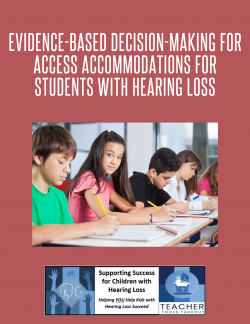
Evidence-Based Decision-Making for Access Accommodations for Students with Hearing Loss
$ 0
This informational handout describes the requirements of Title II of the ADA to ensure communication is as effective for students with hearing loss as it is for peers and how that relates to the need
...
for evidence-based decision-making for access accommodations required for each individual student's school situation. Includes a worksheet for discussion of student situational communication access needs.
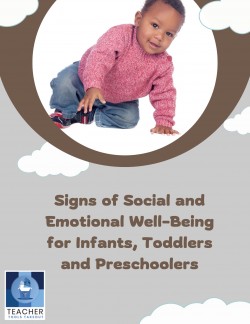
Signs of Social and Emotional Well-Being for Infants, Toddlers, and Preschoolers
$ 0
This handout lists appropriate behaviors indicating typical development of social-emotional well-being age ranges in months along with recommended actions that a parent or caregiver can take to encour
...
age healthy social-emotional development at each age range. From Center on the Social and Emotional Foundations for Early Learning.

Toddler Development and Wearing Hearing Aids 24-36 Months of Age
$ 195
This information describes toddler development for 24-36 months in terms of successful hearing aid use and what families should be aware of, and can do to support full-time hearing aid wear. Delves in
...
to the start of independence skills, shaping children's attempts to put on their own hearing aids and how to help the child perform a self-check once a hearing aid is put on.

Listening Skills - Parallels of receptive & expressive language
$ 0
Explains the parallels of receptive and expressive language as they occur in language development. Vocabulary, early verbal expressions; semantic relationships, morphological endings, syntax, memory a
...
nd sequencing.

Specific Hearing Aid Use Skills to be Learned in Early Childhood
$ 0
This information specifies 5 hearing-aid-wear skills to master by age 3, or no later than the end of preschool. It includes a chart specifying the role of the parent, the child, and the DHH profession
...
al for each of 7 skills.

Baby Development and Wearing Hearing Aids - 0-9 Months of Age
$ 195
This information describes infant development in terms of successful hearing aid use and what families should be aware of, and can do to support full-time hearing aid wear. Divided into the age ranges
...
0-6 months and 6-9 months. Provides detail on why to check hearing aids daily and on how to perform a Ling sound listening check starting about 3 months of age.
The Elephant in the Room Author's Notes
$ 0
The
author explains how hearing loss
technology can improve but not restore hearing, miscommunication can happen,
and communication repair strategies.
...

 Cookies