 Your browser is out of date. For best experience switch to latest updated Browser.
 Get Chrome
 Get Edge
 Get Firefox
Ability Levels
Categories
Resource Types
Age/Grade Range
CCSS
Anchor Standard
Speaking & Listening
Language
Reading

Beyond the Sky’s Limit -PPT
$ 3
NOTE: Powerpoint Presentation for viewing on PCA collection of comic strips revealing troublesome situations for teens with hearing loss. Includes commentary on how each humorous situation might be re
...
resolved.20 more situations and scenarios that mix humor with compassion in negotiating social communication.More antics and advocacy for teens and tweens with hearing loss.

Winning and Sportsmanship
$ 195
Why the emphasis on winning and competition in the classroom or home may be more harmful than good. Activities include: worksheet on winning that includes a winning smile, winning attitude, or winni
...
ng a new friend; finding "winners" in our family or school based on positive character traits; revisit the Aesop Fable: The Tortoise and the Hare; Worksheet on good and "bad" sportsmanship; comprehension passage on the Olympic and Deaflympic Games

Social Skills - Giving Compliments
$ 195
Giving
compliments is an important tool for acquiring more social skills. This
article describes how to explicitly teach giving compliments and includes
basic, intermediate, and advanced
...
activities. It includes 4 fillable
worksheets.
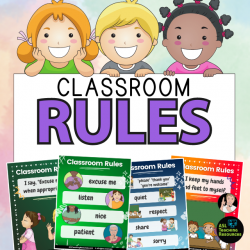
Class Rules and Expectations Posters ASL
$ 695
These vibrant and inclusive Class Rules and Expectations Posters with Sign Language are the perfect addition to your teaching toolkit to create a welcoming and harmonious learning environment for all.
...
Every child’s unique learning style is valued in our classrooms, and inclusivity is at the heart of everything we do. These 10 eye-catching posters have colorful backgrounds, delightful illustrations, and written expectations. But that’s not all! We’ve gone the extra mile by incorporating Sign Language signs, making it easier for our little ones to communicate effectively and fostering a sense of unity.Rules and Expectations Word WallThe Classroom Word Wall Posters are here to enrich vocabulary and comprehension. Each poster features words and engaging illustrations, enhancing memory retention and making learning an exciting adventure. Additionally, we’ve included Word and Signs posters, encouraging active participation, and reinforcing the connection between signs and their meanings. By acquiring these expressions, students can engage effectively with their peers and lay the groundwork for a lifetime of courtesy and empathy.Sign Language and Classroom ManagementImagine the joy on your student’s faces as they discover the power of Sign Language. By using these signs, children build essential communication skills and develop empathy and respect for others. The benefits extend beyond language development; they can even assist with classroom management by providing an alternative way to convey important messages without disruption.

Social - Appreciation and Gratitude
$ 195
Explains that responding positively to the good things and people in our lives is important in effective social interactions.Includes teaching strategies and 3 worksheets

Beyond the Sky’s Limit
$ 299
A collection of comic strips revealing troublesome situations for teens with hearing loss. Includes commentary on how each humorous situation might be resolved.20 more situations and scenarios that m
...
mix humor with compassion in negotiating social communication.More antics and advocacy for teens and tweens with hearing loss.
Child Role Pay Measure - Social Communication in Challenging Situations
$ 3
Functional assessment via role play scenarios RE: peer group entry, response to provocation, response to failure, response to success, social expectations, teacher expectations. Provides scorable resp
...
onse key. For Grades 2, 3, 4, ages 7-10. Fillable version at P01ASM0575.

Being Polite
$ 195
Importance of teaching the language of good manners to students with pragmatic language delays. Worksheets include: " please, sorry, thank you, excuse me" coloring page for younger students; workshe
...
et on "please, sorry, thank you, excuse me" for early elementary students; good manners game board with good and bad manners cards to determine moving forward or back; social situation cards for discussion by older students

Social - Greetings
$ 0
Discusses the steps used in a greeting and the difference between formal and informal greetings.

Deaf Awareness Posters
$ 3
Have you ever wondered how to communicate with someone who is Deaf? These Deaf Awareness posters show nine practical ways to support someone who is Deaf or hard of hearing, designed to encourage inclu
...
sion by allowing anyone of any age to communicate with a deaf person. Sharing with others is especially important during Deaf Awareness Month and at Deaf events.

 Cookies