 Your browser is out of date. For best experience switch to latest updated Browser.
 Get Chrome
 Get Edge
 Get Firefox
Ability Levels
Categories
Resource Types
Age/Grade Range
CCSS
Anchor Standard
Speaking & Listening
Language
Reading

Listening & Language WAR Card Game Companion
$ 2
Playing WAR! is a great card game to foster listening and spoken language abilities. Follow the traditional game directions except lay the cards face down and announce the name of the card being playe
...
ayed such as Four of Hearts or King of Diamonds. The key is to listen and NOT look! If the player sees the cards they lose the opportunity to focus on hearing alone.So simple yet kids listen and learn the language of early math concepts like numbers, their value, comparing, more, same, different, greater, less than, higher, lower, and so on.Taking turns, patiently waiting for their turn, quickly taking a turn without making others wait too long, how to be a gracious winner or loser and other social skills flourish while playing WAR.IDEAL FOR: Listening & Spoken Language, Auditory Verbal, Deaf & Hard of Hearing, Speech, ELA, Teletherapy, Home Carryover or Distance Learning, Face to Face, Digital, Print...INCLUDESPrintable reference gameplay sheetsTwo sizes
The Elephant in the Room Author's Notes
$ 0
The
author explains how hearing loss
technology can improve but not restore hearing, miscommunication can happen,
and communication repair strategies.
...
Me! Lessons for Teaching Self-Awareness and Self-Advocacy
$ 0
This document contains all materials included in the Me! lessons, except for the supplemental PowerPoint presentations. These are listed within each unit and can be downloaded separately from the tabl
...
e below. All 10 units, introductory information, additional resources, and unit quizzes with answers are compiled into a single document. From the University of Oklahoma. 2015.
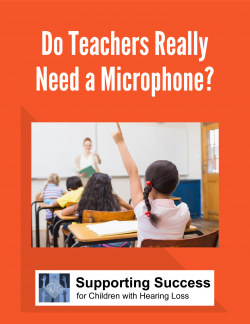
Do Teachers Really Need a Microphone?
$ 150
Teachers who have not had experience with students who are hard of hearing are usually unused to wearing a microphone transmitter and often ask, "Do I really Need a Microphone?" This brief information
...
al article describes how hearing technologies are essential tools for learning.
Communication Strategies - Skills with identified Common Core Standards (fillable)
$ 295
Progress monitoring sheet specifying student skill areas for communication strategies with the specific common core standard identified for each skill area. Fillable.
Auditory Rehab-Auditory Training UNO Card Game
$ 6
Grab the deck of cards and play UNO with an auditory spin using this Auditory Rehab Game Changer™. This activity is designed for individuals that are deaf and hard of hearing and for use in cochlear i
...
ochlear implant rehabilitation for older children, teens, and adults.IDEAL FOR: Deaf & Hard of Hearing, Listening & Spoken Language, Auditory Training, Auditory Rehabilitation, Speech...The UNO Game Changer✤ is played with special directions and rules✤ challenges beginner and intermediate listeners✤ works in closed and bridge listening sets✤ practices identifying words in sets and within connected speech✤ focuses on taking turns, talking while advocating for hearing needs✤ encourages gameplay and practice at home with family and friends✤ practice can lead to communication success✤ is motivating and funGameChangers™➼ result in natural listening practice much different than contrived lists or online or programs.➼ allow for real-time modifications based on the player's auditory skills➼ fosters self-advocacy skills➼ improves communication confidence and successINCLUDES:a pre-game companion that prepares the Listener to play the gamefeatures practice exercises and activities.offers clear directions for therapists, teachers, a listening coach, family members, and friendsincludes listening tips and strategiesfollows an auditory hierarchyNOTE: The amount of practice necessary will vary before a listener is ready to play the game and is dependent upon the listener’s listening skillsCurrently, there are four Game Changers in the seriesLevel 1: Game Changer - BattleshipLevel 2: Game Changer - UnoLevel 3: Game Changer - Guess Who?Level 4: Game Changer - Scrambled States of AmericaNOTE: Battleship and Uno are beginner-level games.Guess Who? and the Scrambled States games include more pre-game exercises due to the nature, difficulty, and complexity of the game and activity. ★ The card game is sold separately, online, or in stores.
Advocacy in Action Curriculum Guide, Worksheets and Assessment tracker for Lower Elementary-BUNDLE
$ 1695
Complete curriculum guidance, fillable sheets, activities, and scenarios for instruction in amplification (including hearing aids, cochlear implants, and FM systems), listening environments, and socia
...
l awareness situations. Also includes a a pre and post assessment skills tracker that can be used to determine strengths and needs, track skill acquisition, and create goals and objectives. Include items 0480-0501, 0475, 0479
Assistive Devices I Will Use - Advocacy in Action
$ 1
Worksheet in which students describe different assistive devices, use for the device, place to obtain, cost, etc. Students develop a reference for themselves for post-high school communication situati
...
ons.

Self-Advocacy Sinister, The Bad Listener
$ 5
This resource is a hilarious self-advocacy activity. Your students will say it is their favorite activity and, you will know they are learning to become the boss of their hearing loss. It was created
...
to encourage self-advocacy skills in children who are deaf and hard of hearing but is effective when targeting listening skills in all kids.The Premise: Sinister has two ears, wears great hearing devices, and has been in listening and language therapy since he was a toddler. But, it doesn’t matter. Sinister is a BAD listener! He doesn’t try and makes up excuses for not listening. Sinister gets in a whole lot of trouble because he doesn’t listen.The adult leads a discussion using Sinister’s poor excuses for not listening. Kids love imagining the trouble Sinister gets himself into because he doesn’t listen. This activity is an easy, no-prep way to encourage the child to be Boss of Your Hearing Loss. Parents can use it at home, teachers and therapists both face-to-face and during tele-practice. While not age-specific it has been successfully used with kids in 1st grade and up through middle school. This resource can be easily leveled up or down to meet various children's goals and needs.Sinister The Bad Listener requires no prep or planning because everything is in this resource. It can be easily used by parents at home, teachers, and therapists both face-to-face and on tele-platforms. This Digital - No Print resource can be opened and played with your favorite PDF reader app on a tablet. When playing on a computer, open and use a PDF reader such as the free Adobe Acrobat Reader DC. Boom LearningSinister the Bad Listener is also available as a Boom Deck in the Listen With Lynn Boom Learning store. Please note: Sinister The Bad Listener is a serve-and-return conversational game between the adult and the listener. There is no audio component or sound bytes included.◈ ◈ ◈ ◈ ◈ ◈ ◈ ◈ ◈ ◈ ◈ ◈ ◈ ◈ ◈ ◈ ◈ ◈ ◈ ◈ ◈ ◈ ◈ ◈ ◈ ◈ ◈ ◈ ◈ ◈ ◈ ◈You'll love all these resources for kids with hearing loss and self-advocacy activities!❤ ❤ Check out the Bundle of 8 Self-Advocacy $$ saving bundle! SELF-ADVOCACY Tips For Communication Success (Free)SELF-ADVOCACY The 5 L's For Listening (Free)SELF-ADVOCACY This or That?SELF-ADVOCACY Bluffing Never Have I Ever ActivitySELF-ADVOCACY Role Play Real-Life ConnectionsSELF-ADVOCACY Scenarios At Group Gatherings & CelebrationsSELF-ADVOCACY Sinister The Bad ListenerSELF-ADVOCACY Scenarios - Turning Lemons Into LemonadeSELF-ADVOCACY Perk Up Your Ears (Ear-related sayings and idioms)SELF-ADVOCACY Listen & Draw Directions◈ ◈ ◈ ◈ ◈ ◈ ◈ ◈ ◈ ◈ ◈ ◈ ◈ ◈ ◈ ◈ ◈ ◈ ◈ ◈ ◈ ◈ ◈ ◈ CUSTOMER TIPS:➼ Click here to stay updated!➼ Be the first to know about freebies, sales, and product launches.➼ New products are 50% off the first 24 hours
STAY CONNECTED:✧ Sign-up here for the Listen With Lynn Email✧ Follow on Facebook
✧ Follow on Instagram
✧ Feel free to email me with questions, before purchasing this resource or anytime later.
❤ Keep up your excellent work. I am blessed to help along the way. Thanks so much! Lynn
Parts of the Ear Game
$ 5
This is a fun digital learning activity for a student to review the 3 parts of the ear. The learner identifies the function of each part, what is in each part and uses a diagram to identify parts of t
...
he ear.There are very few digital learning activities available today. Advocacy practice for students with hearing loss includes learning about hearing. As students begin to learn how they ear, identifying the 3 parts of the ear is a first step. They need lots of practice labeling different parts of the ear and identifying how they help with hearing. Learning Objective:1. The student will be able to identify functions of the 3 parts of the ear. 2. Given a diagram, the student will label the part of the ear.

 Cookies